Showing posts with label Jan Christensen. Show all posts

Friday, January 7, 2022

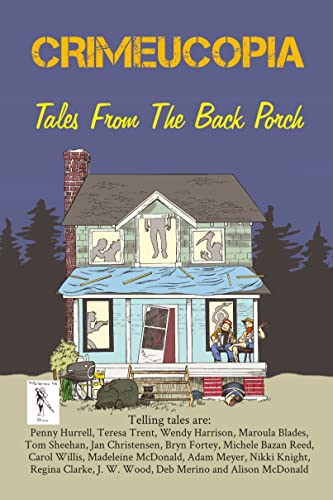
Publication News: Crimeucopia: Takes From The Back Porch


Murderous Ink Publishing has released Crimeucopia: Tales From the Back Porch.  Among the stories included are:

Jan Christensen. "The Crazy Lady of Cherry Tree Lane."

Wendy Harrison. "Bearer of Bad Tidings."

Nikki Knight. "And Your Lake Monster Too."

Deb Merino. "YOLO."

Adam Meyer. "The Lifeguard."

Michele Bazan Reed. "Attempted Murder of Crows."

Teresa Trent. "Hideaway Hills."

Wednesday, December 15, 2021

Publication News: Mysterical-E


 The latest issue of Mysterical-E is out and among the free contents you will find:

Jan Christensen. "The Deceivers."

John M. Floyd. "Gas Pains."

Kaye George. "What's Your Process?"

Saturday, November 21, 2020

SMFS Member Publishing News: Jan Christensen

SMFS list member Jan Christensen’s new book, Death At Paradise Beach: A Luna Saga, is available in both print and eBook formats at Amazon and other vendors. 


Synopsis:


No one at the Sea Breeze Condominiums liked Barry Everhart. But when condo manager, 39-year old Luna Dearborn, finds him bludgeoned to death in the Texas coastal seagrass, the police seem to believe she’s a prime suspect. She quickly hires a shrewd, intriguing lawyer named Casper.The next day her mother and hippie grandmother arrive from Minnesota in a vintage VW bus for a planned visit. Further complicating her life, she’s met a new man who’s igniting some feelings she’s not sure are reliable.Between entertaining her quirky relatives, answering more police questions, and coping with a surprise visitor, Luna has less time to chill out on the condo’s roof garden and laze on the beach while her assistant manager takes charge. When he’s attacked and ends up as a suspect, Luna realizes that she needs to prove someone else is the killer. But there are more shocking surprises in store for her. Will she be able to prevent more deaths, including her own?

Saturday, November 30, 2019

SMFS Member Publishing News: Jan Christensen


SMFS list member Jan Christensen’s latest mystery, Haunting Dreams: Paula Mitchell, P. I., is now out. The book is the fourth book in her Paula Mitchell, P. I. series. It is available at Amazon in both print and digital formats.


Synopsis:

Private Eye Paula Mitchell’s latest case is so bizarre, she’s not sure it will ever be solved.
Why would anyone shoot a chef in the leg? Was his cooking that bad? Rhode Island PI, Paula Mitchell, is hired to find out, but before she starts, another cook is shot in the opposite leg. The plot is now as thick as New England clam chowder.

Paula’s list of suspects climbs as she interviews witnesses and other folks who are connected to the cooks. Is an old crime becoming hot again? Are the victims and the other case connected? It all takes an ugly turn when Paula herself is threatened. As the stakes get higher and higher, Paula races to find out the secrets that will solve everything.


Saturday, August 24, 2019

SMFS Short Story Saturdays: Jan Christensen


Each Saturday, we feature a SMFS list member whose work can be read online for free. These short stories are at least a year old.  

For SMFS Short Story Saturdays today, list member Jan Christensen shares the January 2000 published short story, “Why I Quit Jogging” archived at Mysterical-e.

If you would like to be included and are a member of the SMFS list at yahoo groups, email the link to your story to KevinRTipple at Verizon dot net. If you are not a member, this would be a good time to check us out at Yahoo Groups.

Saturday, December 22, 2018

SMFS Short Story Saturdays: Jan Christensen

Back in May earlier this year SMFS celebrated, as we do each year, International Short Story Month. The celebration led to the creation of the weekly short story segment SMFS Short Story Saturdays. Each Saturday we feature a SMFS list member whose work can be read online for free. These short stories are at least a year old and were not previously linked to during the May 2018 Short Story Month event.


Today for SMFS Short Story Saturdays, Jan Christensen shares her short story, “Taking Care Of Our Own” archived at Crooked: Harboiled Crime Fiction.


If you would like to be included and are a member of the SMFS list at yahoo groups, email the link to your story to KevinRTipple at Verizon dot net. If you are not a member, this would be a good time to check us out at Yahoo Groups.

Friday, October 19, 2018

SMFS Member Publication News: Jan Christensen


SMFS list member Jan Christensen has a new mystery out. Organized To Kill is available in print and digital formats from Amazon and is the fourth book in the Tina Tales Series.


Amazon Synopsis:

It’s bad enough to find a dead body. Even worse when it’s in your lover’s bed. In Organized to Kill, the fourth in the Tina Tales series, Tina and Hank become suspects in a bizarre murder.But when another victim turns up burned beyond recognition the next night, the suspect pool widens. Are the two murders even connected? Hank’s background in federal and police procedure drives the investigation, and Tina’s organizational skills and psychological training help unearth clues. Fortunately, her poking around is sometimes accompanied by her Uncle Bob’s quirky commentary and Hank’s hot bod.Tina is determined to find the reasons for both murders by talking to suspects, figuring out if the two crimes are connected, and if they are, how. Just when she thinks she has the answers, she finds another clue. But it might be too late and put her own, and Hank’s, life in danger.Fourth in Tina Tales Series

Thursday, May 24, 2018

Short Story Month: Jan Christensen

StoryADay.org proclaimed May International Short Story Month back in 2013. As the short story, in the mystery genre, is the reason why the Short Mystery Fiction Society exists, we join in the celebration each year. 


The SMFS spin on festivities is to highlight one or more members' online stories per day. Today, Jan Christensen shares “Rainbow’s End” archived at Mysterical-E.


If you would like to be included, email the link to your story to KevinRTipple at Verizon dot net

Monday, June 26, 2017

Guest Post: IN THE BEGINNING by Jan Christensen


IN THE BEGINNING


So you want to be a writer. So did I. I've probably written my million words--about eighty short stories and ten full-length novels, and a couple dozen articles, some published, some not.

To be a published author takes perseverance and a tough skin. I seem to have both. But not in the beginning.

It hurts to get that first rejection. It's discouraging to get the first dozen.

Baby steps are needed. A baby learns to walk by practicing every day, and that's what a beginning writer should do. You learn an awful lot by simply doing. But it doesn't hurt to read a book a month about writing, some of the better writing magazines, and now blogs.

Read best-selling authors' autobiographies or self-help books. Stephen King in On Writing said you should read an hour for every hour you write. You can learn a lot by reading the current best sellers and widely in the genre you're particularly interested in.

The ONLY way you'll ever get published is to write. Thinking about it, talking about it won't get you there. You have to go to that quiet spot with your writing tools and just do it.

Good luck!


Jan Christensen ©2017

Jan Christensen lives and writes in Corpus Christi, Texas now, after living on the road in an RV and writing wherever she happened to land. She concentrates on mysteries, both short and long. More about her here:  www.janchristensen.com

Monday, June 19, 2017

Guest Post: HOW JOURNALISM GUIDELINES CAN HELP FICTION WRITERS by Jan Christensen

HOW JOURNALISM GUIDELINES CAN HELP FICTION WRITERS


If you ever took a journalism class, you know the basics of writing nonfiction for newspapers and magazines. However, these basic tools can also help you hone your fiction into tight, sharp writing that is both clear and complete. This is, of course, especially important for short story writers.


The basics are: who, what, where, when, why, and how. Every journalism student has to memorize those words. Usually in that order. Sometimes one or more can be left out, but it should be a conscious decision with a good reason. Not long ago, for example, our local newspaper had an article about making the city greener, and explained about an organization giving away free trees in a few days. They did the who—the name of the organization. The what--a giveaway of three trees to anyone who showed up; the when--the date; the why--to make the city green. And the how--go and get the trees. They left out one vital fact, however. The where. No address, no clue about the location of the giveaway. So, both the reporter and the editor missed something really important. Oddly enough, they reported on the event after it was over (I believe this is yearly and they always give away the trees in the same location), told how many trees were given away, and—you guessed it, the location where it all took place. In this case, NOT better late than never.


The reader of fiction almost always needs all these elements, too, for the story to make sense. Leave one vital part out, and you’ve lost her. A good rule of thumb is to be sure you have them all there when you are finished with all your edits. Because you may have put them all in when you wrote the piece (or you may not have), and you may take something out that was really needed, or miss that something was left out in the first place. But if you look one last time for each element, you should be fine.


Jan Christensen ©2017

Jan Christensen lives and writes in Corpus Christi, Texas now, after living on the road in an RV and writing wherever she happened to land. She concentrates on mysteries, both short and long. More about her here:  www.janchristensen.com

Monday, June 12, 2017

Guest Post: STAGES OF WRITING A SHORT STORY by Jan Christensen


STAGES OF WRITING A SHORT STORY


The steps below help me keep on track when writing a new story. Through trial and error, I've come up with these ideas to stay organized.

1. Get idea.  Get excited about your idea.  Start outlining, mental planning--whatever you do to get going.  I always just dive into the writing.

2. Start writing the story. Open a second document on your computer.  I name mine [NAME OF STORY] notes.DOCX.  Keep it open whenever you're working on this manuscript.  In it note each new character's name and description as you write about him or her, and any descriptions and names of specific places.  If you’re in flow and would rather wait until the end of your writing session to put this info down, that's fine, but it will take you longer to find it again to copy and paste.

After the list of names, do what I call a "post outline."  In a few sentences, write down what happened in each scene.  You will bless yourself later for this when you are revising, writing your query letter, and submitting

In the next section of your notes, copy and paste or type in research you did and other items as they come up. To keep good track of your research and to make it easier to go back to it, include the links to the material if you found it on-line.

3. Revise.

4. Submit. In your notes document, make a table to show where and when you submitted the story and the results of the submission. If you need to write a cover letter, first write it in the notes doc, edit it carefully, then copy and paste it into an email submission or into an on-line form if that’s the way submissions are handled by your target.

5. Instead of waiting to see if it’s accepted, get to work right away on a new story.

Good luck!


Jan Christensen ©2017

Jan Christensen lives and writes in Corpus Christi, Texas now, after living on the road in an RV and writing wherever she happened to land. She concentrates on mysteries, both short and long. More about her here:  www.janchristensen.com

Monday, June 5, 2017

Guest Post: WHO SAID THAT? by Jan Christensen

It is the first Monday of June and Jan is back today with some simple advice that is often ignored these days….

WHO SAID THAT?


I really want to know. All the time. In real life, and when reading.


Nothing makes me more ticked off with a story than not knowing who’s speaking. And it’s rare anymore for me to read a book where I don’t find places where I have to reread to figure it out.


Please, don’t do this to your readers. I notice it happens most often near the end of a story when things are winding down, answers to questions provided, and lots of characters are talking. Just when you really don’t want to stop to figure out who’s saying what. Did the writer get in a hurry and leave off the attributions? Did the author figure that her characters’ voices were so clear by now the reader would automatically know who was talking? (Doesn’t happen with me, and I’m sure I’m not alone in that.) Has the writer bought into the idea that writing “he said” or “she said” is breaking a rule?


See, you don’t want me wondering about this when I’m reading your story. You want me to glide through it, to never have to stop to puzzle out something so simple as “who said that?”


I’ve been reading and writing for a long time now. A decade or so ago a very popular author suggested that a simple “he said/she said” was the best way for the reader to know who was talking instead of using modifiers or such attributes as “he hissed,” or “he growled,” or said with an adverb, “she said softly,” or “he grumbled loudly.” This decade, someone else “ruled” that you should not only not use attributes at all, but instead use small actions to show what the character is doing and thinking while speaking. Thus, you may notice a heck of a lot of coffee being drunk now in what you read. Or tea. It’s so easy to use “Jenny took a sip of coffee” that many writers do use it. Over and over again. After Jenny takes a sip of hers, John answers and adds cream to his. How does this add one bit of information or interest to the story? It doesn’t. Instead, it’s often distracting. Very distracting if the author only uses this device.


What to do? Mix it up, of course.


1.      Have some characters use certain tics to show they’re upset (fingering a necklace, tapping a pen, etc.)
2.      Have the occasional character hiss (be sure there’s some “s” sounds in the words he utters, however) or roar or whisper.
3.      Use “he said” or “she said” when you want fast action along with the dialogue. Any reader older than ten is used this and won’t even notice. But they will miss it if they cannot figure out who is speaking.


And they will be ticked. Trust me on this.


One more bit of info about this. With e-readers, things can get even worse when the attributions are left out because of wonky formatting. Which is exactly what happened to me just before I wrote this rant--I mean-- advice. Near the end of a novel by an extremely famous and popular writer, she left out a “he said” where the formatting got messed up (big NY publisher, too) and two paragraphs ran together. Or I think they did. I had to go back to re-read it because at first I thought one person was speaking, but when I got about four or five paragraphs farther, I thought it might have been the other character. I’m still not sure I ever got it right because it went on for eight paragraphs without telling who was talking. There was a small action in there, but it didn’t help identify the character speaking. In fact, it made it harder to figure out. What do you suppose I’m going to remember the most about this novel?


Jan Christensen ©2017

Jan Christensen lives and writes in Corpus Christi, Texas now, after living on the road in an RV and writing wherever she happened to land. She concentrates on mysteries, both short and long. More about her here:  www.janchristensen.com

Monday, May 29, 2017

Guest Post: FIRST LINE; FIRST PARAGRAPH by Jan Christensen

It is Monday and that means Jan Christensen is back today sharing wisdom…..


FIRST LINE; FIRST PARAGRAPH


I have used the “Look Inside” feature on Amazon more and more when making a decision to buy a book or short story, especially if the author is new to me. And I’ve been rejecting several lately because they have what I consider a fatal flaw. They begin with a character alone and musing. I admit that some readers don’t mind this at all. But some will become quickly bored if the musing goes on too long, which it usually does. Musing, by definition, takes some time. In my opinion, it’s better to get right into the story and fill in the backstory when needed. Using the character is thinking about the past, after all.

What should the first line of your story do? Grab the reader, of course. How do you do that? For modern writers, usually having something exciting happen works well. Involve at least one sense, and you’ll do even better. The main character hears a scream, smells smoke, sees an airplane nosediving from the sky, touches something icky, tastes something odd.

To complete the first paragraph or sentences, be sure to plant the reader someplace specific. The character is most likely not floating out in space. Having her on the move is a good move. Some bit of action that nails the setting helps. Preferably physical action on her part, not in a car. A train might be okay. An airplane will work if she hears a scream or smells smoke or feels the plane taking a nosedive.

Whatever you do, don’t have the character waking up or just sitting around someplace thinking.
    
To recap, have your character’s senses on alert. Set your character in a specific place, and use a small bit of description to plant the reader. And finally, show the reader how your character is reacting emotionally to what’s going on around her.

A good exercise is to write down in your reader’s notebook every first line and paragraph you read that pulls you into the story. This includes first lines of scenes, not just the first line of a short story or novel. And perhaps also write down those that you feel are not very good.


Jan Christensen ©2017

Jan Christensen lives in Corpus Christi, Texas, and has had nine novels and over seventy short stories published. www.janchristensen.com  
Monday, May 22, 2017

Guest Post: DIFFERENCES BETWEEN A SHORT STORY AND A NOVEL by Jan Christensen

Monday means Jan Christensen is back today with another informative post. Apparently, the difference is more complicated than novels have a lot more words.


DIFFERENCES BETWEEN A SHORT STORY AND A NOVEL


An easy way to visualize the difference between writing short or long is to think of pencil sketches for the short story scene--everything is there, but the details are scanty.  Each scene is fully developed, with dialog, a bit of description/setting, and what the characters are feeling and how they're acting.  Usually the time frame is short and the viewpoint is all one character's.

For example, a sketch of a kitchen with the sun shinning in the window (time of day, maybe season), one person facing the viewer (VP character), the background sketchy (pun intended), people black and white, but dressed (or maybe not, if it's that kind of story), but the clothes are probably not that important.  If they are, there's more detail--more lines drawn to indicate type of clothing.  Each character wears a certain expression--the viewer can pretty much tell what each one is thinking. 

A novel is more of a series of oil paintings.  Each one has a colorful background (description/setting), the characters are vivid, and each succeeding painting can be shown with different viewpoint characters and over a longer span of time.  The sun is shining in the first picture, but the moon is hanging high in the sky later on.  The tree outside can have leaves one time, and none later on.  Different characters are the focus of each painting, indicating a change of VP.  Clothing is interesting, and sometimes important to the story.

Each kind of story, whether short or long, has its own special pull.  The quick sketches of a short story where the reader gets to add her own details to fill out the story, but where the story is over quickly.  The oil paintings of the novel where the artist puts in everything for the reader, so the reader can go along with the writer more, and where the story is much longer with more characters, more settings/descriptions, more dialog, even subplots. 

If you are a visual person when writing and reading, as I am, this metaphor for the differences between writing long and short can help you, I believe, with each scene.  While writing a short story, see the scenes as pencil sketches and "report" what you see.  While writing a novel, see each scene as an oil painting with all its rich detail, and get it all down. 

I was writing a short story a while ago, and about halfway through realized I'd put in nothing about setting or the weather.  It came to me then that a short story is more like a pencil sketch than a novel, and so I stopped what I was doing to write this essay.  After I finished the essay, I fleshed out the setting and weather details in the story with only a few sentences.

Then, when I wrote “the end” to the story, I felt as if I did a complete job of it. Anyone else tend to forget mentioning settings enough, and the weather? Sometimes they really don’t matter that much, in my opinion. But I bet some readers disagree with that.


Jan Christensen ©2017

Jan Christensen lives in Corpus Christi, Texas, and has had nine novels and over seventy short stories published. www.janchristensen.com
Saturday, May 20, 2017

Short Story Month: Jan Christensen

StoryADay.org proclaimed May International Short Story Month back in 2013. As the short story, in the mystery genre is the reason why the Short Mystery Fiction Society exists, we join in the celebration each year. The SMFS spin on festivities is to highlight one or more members’ online stories per day.

Today, Jan Christensen shares “Grave Matters: A 4rth of July Mystery Short Story” archived at Kings River Life Magazine and "Just A Man" at Mysterical-E.

If you’d like to be included, email the link to your story to KevinRTipple  at Verizon dot net.