Showing posts with label Andrew Welsh-Huggins. Show all posts

Thursday, November 30, 2023

SMFS Member Podcast News: Home for the Holidays by Andrew Welsh-Huggins


SMFS list member Andrew Welsh-Huggins’ short story, Home for the Holidays, is featured this week at Ellery Queen's Mystery Magazine's Fiction Podcast. Read by the author, the podcast can be heard here.


EPISODE DESCRIPTION

Andrew Welsh-Huggins is an accomplished author who has been nominated for Shamus, Derringer, and ITW Thriller awards. We're thrilled to feature his reading of "Home for the Holidays," a Christmastime thriller from our Jan/Feb 2020 issue, as the latest entry in our podcast series. 

Sunday, May 21, 2023

SMFS Member Guest Post: Three Simple Tips For Tightening Your Prose by Andrew Welsh-Huggins


Please welcome back Andrew Welsh-Huggins back to the blog today….


Three Simple Tips For Tightening Your Prose 

by Andrew Welsh-Huggins


Tackling a piece of mystery fiction, from short story to novel, can be a daunting task, for novice and veteran writers alike. The good news is there’s never been more help available for the process, whether it’s tips on craft, advice on editing,  suggestions for getting published, the inside scoop on marketing, and more.


But this embarrassment of writing riches also comes with a downside: how to keep track of it all. It’s a problem I encountered even while writing my eleventh book, a crime novel titled The End of the Road. Pantsing vs. plotting. Third-person limited vs. third-person omniscient. Show, don’t tell. Some days, trying to juggle all these writing recommendations, you end up feeling like Prince Humperdinck in the film Princess Bride: “I’ve got my country’s 500th anniversary to plan. My wedding to arrange. My wife to murder. And Guilder to frame for it. I’m swamped.”


With that kind of pressure, it pays to keep it simple. In that spirit, I offer three easy things you can do beginning today to streamline your prose—and lower your wordcount, at least a bit—with hardly any heavy lifting:


_ Reduce attribution. After years of waging this battle with my own writing, I will hazard that at a minimum, half of every use of “he said” or “she said” can be eliminated. Not only are their appearances unneeded, they often bog down dialogue, which should pull a reader forward, not push her back. If the individual tics and tones of speakers are well-established, readers can follow along just fine. Still, if a scene goes on for a while, it’s all right to occasionally provide a reminder of who’s talking and while you’re at it, flavor the text with a description of some sort, a la: “… she said, remembering how long ago breakfast was and wondering when this conversation would end.” But those interjections can usually be the exception, not the rule.


_ Stop starting. So many times, we read that a character “…. started walking across the room.” Or “… started to interrupt.” Or “ … started to open the door.” Really? What about just: “John walked across the room.” “Polly interrupted.” “Corrine opened the door.” I’m guilty a hundred times over of this foible, but I’m not alone. It pervades fiction, including that of some of our finest writers. It’s starting to drive me batty.


_ Have it with “had.” Tenses can be confusing and make you tense as well. But without question, an easy way to simplify your writing is to stop casting every action in the pluperfect. Take this made-up example: “I remember the first time I’d met Jack. I’d seen him at Donovan’s one Saturday night. He’d walked the length of the bar to offer a woman a fresh martini olive to replace the one she’d just eaten.”


Let’s try again.


 “I remember the first time I met Jack. I saw him at Donovan’s one Saturday night. He walked the length of the bar to offer a woman a fresh martini olive to replace the one she just ate.”


I’m not sure what’s driving the overuse of the pluperfect but I know I’m not alone in wanting—for the most part—to show it the door. Marvin Kaye, the late fiction editor of Sherlock Holmes Mystery Magazine, went so far as to remove unnecessary “had’s” in stories, as he explained on his submission page. “Boiled down, here is what’s wrong with some (not all) compound past tenses—except for fiction written in present tense, our convention is to put things in the simple past.”


So there you have it. Deep six “said.” Skip “started.” Halve your “had’s.” You’re already ahead of the game, and have nothing else to worry about other than story arcs, back stories, loglines, synopses, and whether to prologue. Happy writing!


Andrew Welsh-Huggins ©2023 


Writer, reader, veteran pet feeder. Shamus, Derringer and International Thriller Writers award-nominated. Find my work and sign up for my newsletter at https://www.andrewwelshhuggins.com/.

Tuesday, April 11, 2023

SMFS Member Publishing News: The End of the Road by Andrew Welsh-Huggins


Today is publication day for The End of the Road by SMFS list member by Andrew Welsh-Huggins. Published by Mysterious Press, the read is available in print and digital formats, and is available from the publisher, Amazon, and other vendors. You can also learn more at the author’s website.


Publisher Description:

A bank robber tries to leave behind his life of crime after serving his time. But getting out isn’t so easy.

Myles’s courtroom testimony should have put Pryor, their one-eyed ringleader, behind bars after the bank robbery gone wrong, yet somehow Pryor got off scot-free while Myles served time. Now, upon his release, Myles decides he is done with his life of wrongdoing—a change that will only be possible if he can kill Pryor and turn over a new leaf. Pryor has other ideas, and the collision between these two deadly forces soon leaves the ex-con in critical condition, clinging to life in a hospital bed.

With Myles in recovery, it’s up to his girlfriend Penny to avenge her lover and salvage their chance at normalcy. As Pryor and his cronies prepare for their biggest score yet–targeting a vulnerable small-town Ohio bank on a day when Amish farmers arrive with hefty cash deposits–Penny is hot on their heels. But is she prepared for the carnage Pryor will gleefully wreak on the path to his prize?

With characters as sharply drawn as those in a Dennis Lehane novel and a rich Midwestern setting, The End of the Road is a fast-paced rural noir that announces Andrew Welsh-Huggins as one of the most powerful voices in the mystery world.

Thursday, June 9, 2022

Member Publication News: Andrew Welsh-Huggins

 Andrew Welsh-Huggins' story "Digging In" appears in Issue #40 of
Black Cat Weekly,
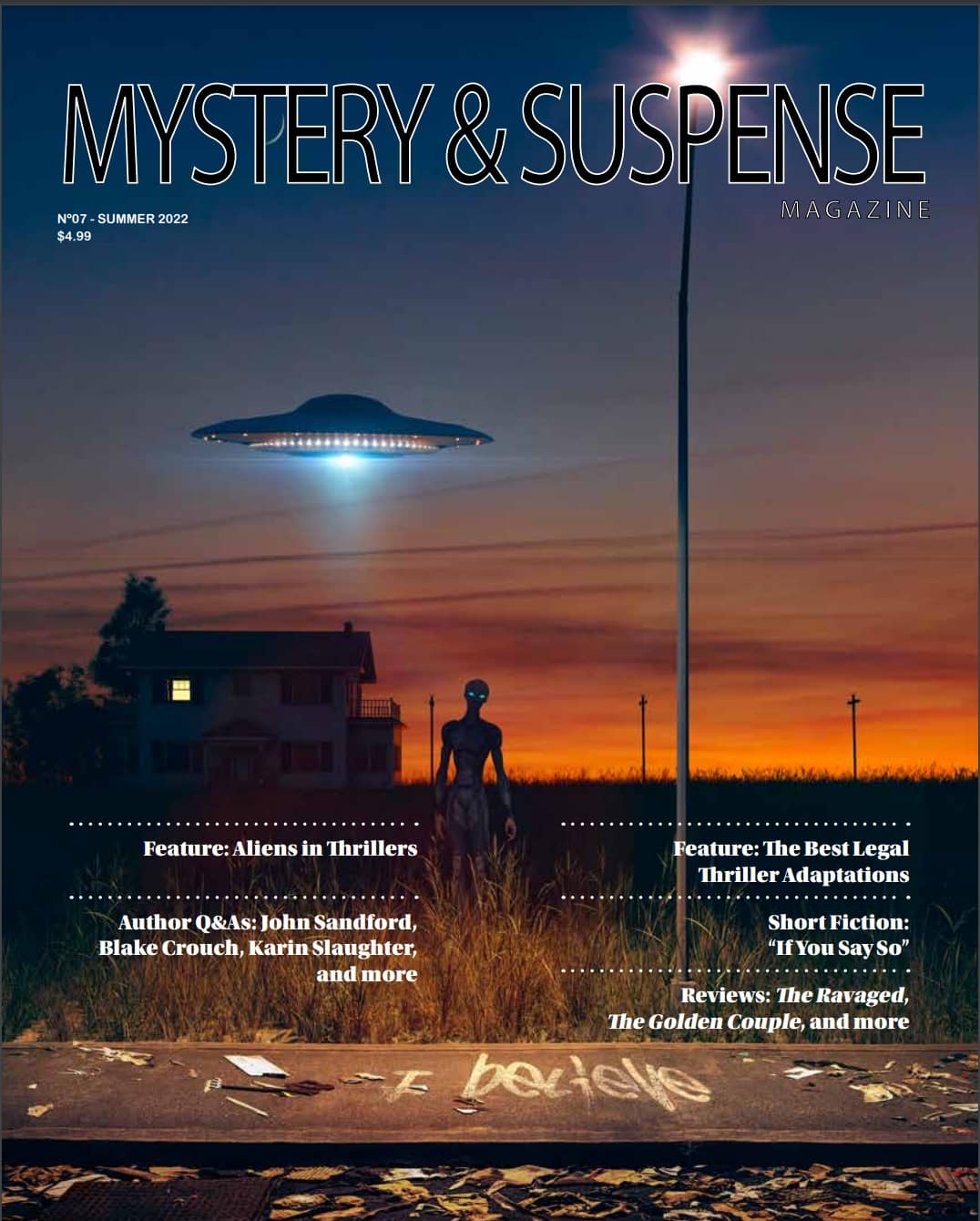
and his "If You Say So" is in the Summer issue of Mystery and Suspense Magazine.  Both are available now.  M&SM can be downloaded for free here.

Thursday, June 2, 2022

Award News: Shamus Nominations

 
The Private Eye Writers of America have announced the Shamus Award nominees.  Congratulations to these members of the Short Mystery Fiction Society.


Best PI Paperback

Andrew Welsh-Huggins. An Empty Grave.


Best PI Short Story

Michael Bracken. "Disposable Women."

Richard Helms. "Sweeps Week."


Tuesday, April 12, 2022

Publication News: Groovy Gumshoes


 Down & Out released a new short story collection titled GROOVY GUMSHOES: PRIVATE EYES IN THE PSYCHEDELIC SIXTIES edited by Michael Bracken.  It features:

Jack Bates. "Creaky Jonah."

N. M. Cedeño. "Nice Girls Don't." 

Steve Liskow. "The Ugly."

Adam Meyer. "Sons of Soundview" 

Stephen D. Rogers. "Undercase G."

Mark Troy. "Sundown Town."

Andrew Welsh-Huggins. "Building Something Better."


Thursday, September 9, 2021

Publication News: Best Mystery Stories of the Year


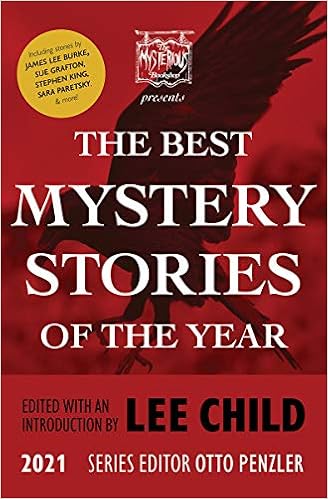
The first volume in Otto Penzler's new series The Mysterious Bookshop Presents the Best Mystery Stories of the Year has been released.  Seven of the twenty stories are by members of the Society:

Michael Bracken. "Blest be the Ties That Bind." Black Cat Mystery Magazine.

Martin Edwards. "The Locked Cabin." The Book of Extraordinary Impossible Crimes and Puzzling Deaths.

John Floyd. "Biloxi Bound." The Strand Magazine.

Jacqueline Freimor.  "That Which is True." Ellery Queen Mystery Magazine.

Tom Mead. "Heatwave."   Detective Thrillers Short Stories.

Joseph Walker. "Etta at the End of the World." Alfred Hitchcock Mystery Magazine.

Andrew Welsh-Huggins. "The Path I Took."  Mystery Tribune.

Sunday, March 8, 2020

SMFS Member Publication News: Andrew Welsh-Huggins


SMFS list member Andrew Welsh-Huggins short story, “What Mr. Leonard Said” appears in the  Mystery Weekly Magazine: March 2020 issue. The read is available from the publisher  and at Amazon in both eBook and paperback formats and other vendors.

Synopsis: 

At the cutting edge of crime fiction, Mystery Weekly Magazine presents original short stories by the world’s best-known and emerging mystery writers.
The stories we feature in our monthly issues span every imaginable subgenre, including cozy, police procedural, noir, whodunit, supernatural, hardboiled, humor, and historical mysteries. Evocative writing and a compelling story are the only certainty.
Get ready to be surprised, challenged, and entertained--whether you enjoy the style of the Golden Age of mystery (e.g., Agatha Christie, Arthur Conan Doyle), the glorious pulp digests of the early twentieth century (e.g., Dashiell Hammett, Raymond Chandler), or contemporary masters of mystery.

In this issue:
“Death Under The Dragon Prow” by Scott Forbes Crawford: In this historical whodunit a Viking chief is found murdered aboard his ship, and the brewing storm is the least of the dangers facing his wife. Far from shore and surrounded by cut-throats, she must find the killer—to avenge her husband and escape with her life.
“The Big Seal” by Andrew McAleer: It's a race against time in this hardboiled tongue-in-cheek romp when a self-revered notary public must save the justice system.
“What Mr. Leonard Said” by Andrew Welsh-Huggins: A poetic serial killer deals with the ‘death under mysterious circumstances’ of his beloved Texas middle school teacher, triggering a series of slayings of particular resonance in the Lone Star State.
“The White Box” by E R Brown: A caper with a twist begins with a man grilled by the DEA as he retrieves the ashes of his brother, whose bomb killed a drug boss and himself and ends with an escape plan.
“The Whisperers” by L. A. Wilson, Jr.: In this supernatural mystery, Ivory Roberts learns that his nine-year-old neighbor has a mysterious illness, but it is not the illness that is likely to take his life. The real danger comes from others who surround him including his doctors.
“The Florida Regiment” by Denise Robbins: A darkly humorous suspense in which a former police detective based in Miami, Florida, who quit the force and her alcohol abuse problem, intending to turn over a new leaf finds her past quickly catching up with her in strange and unexpected ways.

Saturday, March 7, 2020

Guest Post: Editing A Short Story Anthology in Three Easy Steps, Along With Months and Months of Hard Work by Andrew Welsh-Huggins


Editing A Short Story Anthology in Three Easy Steps, Along With Months and Months of Hard Work

By Andrew Welsh-Huggins

Editing my first short story anthology stretched me both as an editor and a writer. I undertook the project beginning in 2017 when I pitched the concept of Columbus Noir to Akashic Books as part of its long-running Noir series. After the project was accepted and the contract signed in January 2018, I had eleven months to solicit stories, edit them, and assemble the manuscript. I developed a system early on that proved useful as submissions rolled in and my deadline approached, and which I thought might be worth sharing.

When a story first arrived, I created a Word folder with the story title and saved it there, along with a second notes document devoted purely to that story. However, no edits yet.

Next, I sent the story to the Kindle app on my iPhone, which is where I read e-books and e-documents (I don’t have a tablet or a physical Kindle right at the moment). At the next available juncture, I would sit in my arm chair in the living room away from my desk and read the submission through as I would any story—again, without making any edits.

After that—usually a few days later—I returned to my office and read the story a second time on my computer. As I did, I wrote down observations on that separate notes document, but didn’t insert any comments into the story itself. Those observations typically entailed plot points to come back to, grammatical issues, and any thematic questions.

In the third step in my process—usually after another few days—I saved the story as an editing file, consisting of the story title with my initials tacked on. Then, with Word’s tracking changes activated, I read through the contribution and made edits and suggestions as I saw fit. Finished, I sent that document to the writer and began a back-and-forth conversation about the story and my edits.

The hardest part of this was not necessarily the edits, but juggling the combination of staggered due dates. Because I invited writers over a period of weeks, the arrival of a first draft often coincided with the deadline for someone else’s revision. I tracked everything on a Word document, including where in the process a story was, and made ample use of Google Calendar for any deadline prompting of the contributors that I needed to do. Once October 2018 arrived, I assembled the manuscript and did a final read-through of everyone’s stories. Based on that, I made a few additional but mostly minor suggestions to the writers before submitting the final draft. Slotted into the publishing rotation, Columbus Noir launched March 3 as the 101st title in the Akashic series.

In hindsight, I learned three lessons I recommend to anyone tackling a similar project:

_ Underscore the rubrics. Whether your anthology is based on a call for submissions or invitation-only (as Columbus Noir was), the clearer the instructions are about the project upfront, the better. This includes everything from length requirements, to making sure the theme of the anthology is clear—in this case, stories in the noir style, each with a strong connection to a Columbus-area neighborhood—to whether the work must be original to the collection, as the Akashic series mandates. Laying all this out in writing came in handy when, in a couple of cases, I had to part ways with writers whose submissions just weren’t working.

_ Explain your edits. It’s reasonable to suggest changes, whether syntactical or thematic, but it’s also reasonable to explain why you’re asking for it. This is not a universal rule, nor should it be a heavy lift, but a simple note in the Word comment mode is a fair way to outline your thinking.

_ Don’t neglect your own contribution. The other part of my balancing act was my own short story along with the introduction to the book. Of the two, I was more nervous about the latter, since it would set the tone for the anthology and also serve as an explanation for why Columbus was noir enough to begin with. I made sure to undertake both pieces early on, giving me plenty of time to show both my story and my introduction to beta readers ahead of inclusion in the final manuscript.

In conclusion, while assembling Columbus Noir was a chore at times, I tried never to lose sight of the obvious: someone was paying me to edit fantastic stories by a bunch of great writers. That was the most important lesson of all.


Andrew Welsh-Huggins ©2020


Writer, reader, owner of too many pets. AP News Guy, author of the Andy Hayes private eye mystery series, and editor, Columbus Noir from Akashic Books.
Twitter: @awhcolumbus

Friday, August 2, 2019

SMFS Member Publishing News: Andrew Welsh-Huggins


SMFS list member Andrew Welsh-Huggins’s short story, “You Can’t Go Alone” appears in  Mystery Weekly Magazine: August  2019. The read is available from the publisher in both print and digital formats as well as Amazon and other vendors. The SMFS members in this issue are:

Synopsis:

At the cutting edge of crime fiction, Mystery Weekly Magazine presents original short stories by the world’s best-known and emerging mystery writers. 
The stories we feature in our monthly issues span every imaginable subgenre, including cozy, police procedural, noir, whodunit, supernatural, hardboiled, humor, and historical mysteries. Evocative writing and a compelling story are the only certainty.
Get ready to be surprised, challenged, and entertained--whether you enjoy the style of the Golden Age of mystery (e.g., Agatha Christie, Arthur Conan Doyle), the glorious pulp digests of the early twentieth century (e.g., Dashiell Hammett, Raymond Chandler), or contemporary masters of mystery.
In our cover story, “Stranger In Paradise” by James Nolan, a naïve tourist in the French Quarter, seeking to broaden her horizons, drops by to meet a friend-of-a-friend, an antique dealer in cemetery artifacts. Hours later, as she regains consciousness naked and bound in his bed, she realizes she stumbled into a woeful misadventure.
In “You Can't Go Alone” by Andrew Welsh-Huggins a homicide detective sets out to avenge the death of his drug addict son, but must reconsider his quest when he receives a warning along the way.
It’s 1939 Manhattan. Weegee, the city’s most infamous crime photographer, needs a gimmick to excite readers bored by yet another photo of a bullet-riddled gangster. What he comes up with is sheer genius—but the results are not what he expects in Bruce W. Most’s “The Dead Man In The Pearl Gray Hat.”
“Three Hogg’s Tales And One Hairy Ending” by Jeff Dosser is a modern-crime retelling of The Three Little Pigs. How far will a brother go to protect his siblings?
In “The Mayfly” by David Bart a dying Morgan Ayers has one last chance to protect his family. He utilizes a wheelchair, some WD-40 and a socket wrench.
A timely piece: an El Chapo lookalike finds himself on the wrong side of the law in T.L. Huchu’s “El Chappie: The World's Second Greatest Criminal”. But, what did he do that was so unlawful?
In “Jumpers For Jesus” by Emily Devenport a go-getter reporter goes after a go-getter religious zealot. Who is a better shepherd to the faithful—a charlatan or a daredevil? 

Saturday, July 27, 2019

SMFS Short Story Saturdays: Andrew Welsh-Huggins


Each Saturday, we feature a SMFS list member whose work can be read online for free. These short stories are at least a year old.  

For SMFS Short Story Saturdays today, list member Andrew Welsh-Huggins shares the 2018 published short story, “Long Drive Home” archived at TOUGH.

If you would like to be included and are a member of the SMFS list at yahoo groups, email the link to your story to KevinRTipple at Verizon dot net. If you are not a member, this would be a good time to check us out at Yahoo Groups.

Saturday, February 16, 2019

SMFS Short Story Saturdays: Andrew Welsh-Huggins


Each May SMFS celebrates, as we do each year, International Short Story Month. The May 2018 celebration led to the creation of the weekly short story segment--SMFS Short Story Saturdays. Each Saturday we feature a SMFS list member whose work can be read online for free. These short stories are at least a year old and were not previously linked to during the May 2018 Short Story Month event.


Today for SMFS Short Story Saturdays, Andrew Welsh-Huggins shares his 2017 short story, “A Valentine’s Day To Remember: A Valentine’s Day Mystery Short Story" archived at Kings River Life Magazine.


If you would like to be included and are a member of the SMFS list at yahoo groups, email the link to your story to KevinRTipple at Verizon dot net. If you are not a member, this would be a good time to check us out at Yahoo Groups.


Friday, December 21, 2018

Guest Post: Fiction Writing As Time Travel by Andrew Welsh-Huggins

Please welcome SMFS list member Andrew Welsh-Huggins to our blog today…

Fiction Writing As Time Travel

           Nailing the details of real-life police investigation is a no-brainer when it comes to writing crime fiction. Anyone who’s read the procedural mysteries of Alafair Burke or Michael Connelly knows the pleasure of encountering accurate information about how detectives do their jobs intermixed with compelling fictional tales. Conversely, everyone has experienced the sinking feeling when a writer confuses a revolver for a semi-automatic or sentences a heartless killer to thirty years in jail, not prison.


          As a reporter by day and a mystery writer by earlier in the day, I’m accustomed to tapping experts to ensure my imagination has its facts straight. I interviewed both an arson investigator and a retired state geologist for my novel Slow Burn, took a behind-the-scenes tour of the Ohio Statehouse for Capitol Punishment, and talked to experts on human trafficking as well as ex-trafficking victims for The Hunt. Recently, I took on a new research challenge with two short stories set three decades ago in Providence, Rhode Island. Not only did I need to learn about police and court procedure in those bygone days, I enlisted another important source: my own memory of living there in the mid-1980s.

          Despite fond recollections of my wife’s and my sojourn in Providence, I had only been back once—early in the 1990s—before I started my first story last year. That lone return visit was well before the city’s downtown underwent a transformation that included the unearthing of the long-buried Woonasquatucket and Moshassuck rivers, which meant the city was more or less unchanged in my mind. Though a negative for my inner tourist, this time away turned out to be a good thing for my fiction writing, since the era was frozen in place for me.


          I had my temporal landscape; now I needed experts to fill in the blanks. Upping the ante, I wanted information not just on the Providence police homicide division, but on that division three decades ago. Initially, this proved almost as difficult as resurrecting old memories. Providence in the 1980s was still living down its reputation as the seat of the New England mob, a standing that didn’t always stop at the doors to the police station. Locating people who were in law enforcement at the time and who were willing to talk to an out-of-state reporter-slash-mystery writer proved as easy as coaxing brown bears from dens during hunting season. Weeks passed and my multiple emails and phone calls to retired Providence detectives whom I’d located on the Web met with silence. Finally, with just a few days before my deadline, a retired investigator answered an email with an out-of-the-blue call. Soon I was wondering how I would ever get him off the phone as he explained the types of cars detectives drove (Plymouth Furys), the layout of the homicide bureau (“a mish mash of desks”), and the bar that detectives hung out at after work (Christopher’s). The story that emerged from that research, The Murderous Type, appeared last year inSnowboundan anthology of short New England crime fiction.


          I faced similar challenges locating sources for a follow-up, this time trying to find a defense attorney familiar with legal practices and court layouts in the 1980s. Again, patience paid off as after several weeks I found a lawyer willing to fill in the details, and even offer me his own spin on a possible plot twist. That story, Nice Grammar, That Guy, was published in the December issue of Mystery MagazineWeekly.

          In summary, I used three tools for researching and writing these stories from long in my past:

_ The Internet. This ‘no duh’ helper prodded my memory by providing everything from the location of the city’s paste jewelry manufacturers (in and around Grosvenor Avenue) to the names of long-gone eateries like Winkler’s steakhouse. It also helped me show, not tell, the era, as I researched ways to inform the reader we were in the 1980s, including a reference to the 1986 Bangles tune “Walk Like An Egyptian” and details of the decade’s savings and loan scandal.

_ Experts. The Web helped me find the aforementioned defense attorney and retired detective, but it was calls and emails with them that garnered the kinds of time-traveling details necessary for the story, such as the lawyer’s description of a municipal courtroom at the time: “not traditional looking at all, like a basement rumpus room.” Individuals, not the Internet, almost always provide the best details for a fiction writer.

_ Myself. One of the final lines I added to The Murderous Type came not from anyone I spoke with or online research, but from my own memory of a street we used to live on and the oceanic look of the closely placed houses, so different from the homes where I grew up in a western New York State village. I wrote: The bright red house was a triple-decker, like all the houses on the street, homes tall and solid and honestly built as nineteenth-century sailing ships. An observation that had stayed with me over three decades turned out to be one of the final pieces of my fictional puzzle.

          Of course, my task would have been easier if it had occurred to me back then that I might be writing police procedurals about Providence someday. But that’s one of the fun things about fiction writing. You never know which direction, in space or in time, it may take you.    

Andrew Welsh-Huggins ©2018

Writer, reader, owner of too many pets. Recently asked for pancakes at Waffle House. Author of the Andy Hayes private eye mystery series, including The Third Brother. Winner, 2017 Al Blanchard Award for The Murderous Type, available in Snowbound anthology from Level Best Books.
Twitter: @awhcolumbus